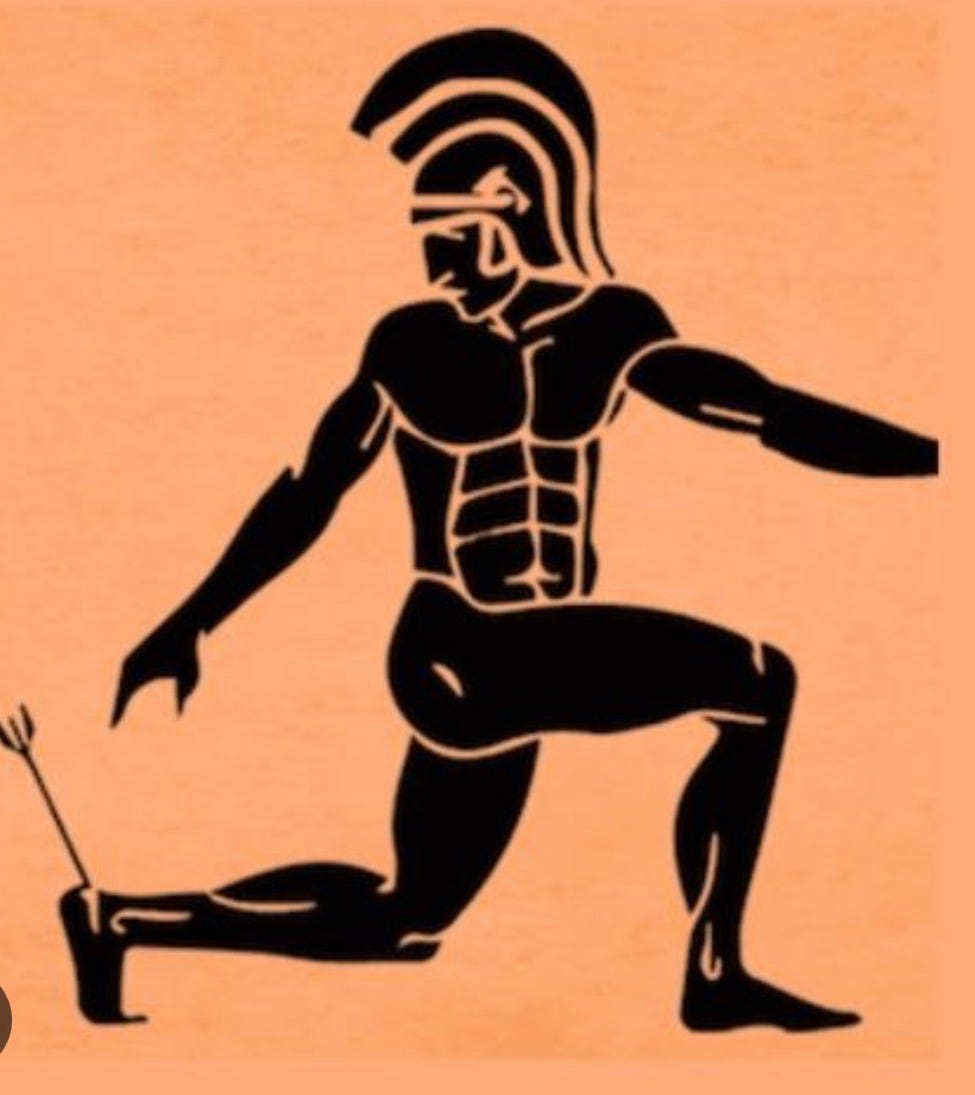
Our Achilles Heel
 Why we misunderstand odds and why it matters
Everyone has a weakness. A blind spot. A vulnerability.
For Achilles, it was his heel. Superman had kryptonite. Ted Williams struggled with pitches low and away.
But what about the average person?
I often think our Achilles heel is our inability to understand probabilities. And increasingly, it’s making us more stressed than ever.
I was reminded of this recently after speaking with a young man who is navigating the college admissions process. He had been accepted to several very good universities, but not his first choice, which happens to accept fewer than 6% of applicants.
In an attempt to alleviate some of his angst, I asked him a simple question:
“How many high schools do you think there are in the United States?”
He guessed 12,000.
The actual number is closer to 25,000.
I then asked him how many valedictorians there are in the U.S.
He understood the point. Roughly one valedictorian at each high school, so 25,000 in total.
Considering that the Ivy League enrolls approximately 15,000 freshmen each year, in theory, 40% of all valedictorians don’t have a spot. Once you account for international students, even fewer do.
Yet every year, students and parents across the country are devastated by rejection letters from elite universities.
This phenomenon isn’t limited to college admissions. It shows up practically everywhere. Companies, marketers, and advertisers know it and often exploit it.
Youth travel programs charge thousands of dollars and promise pathways to scholarships and college admissions despite the long odds.
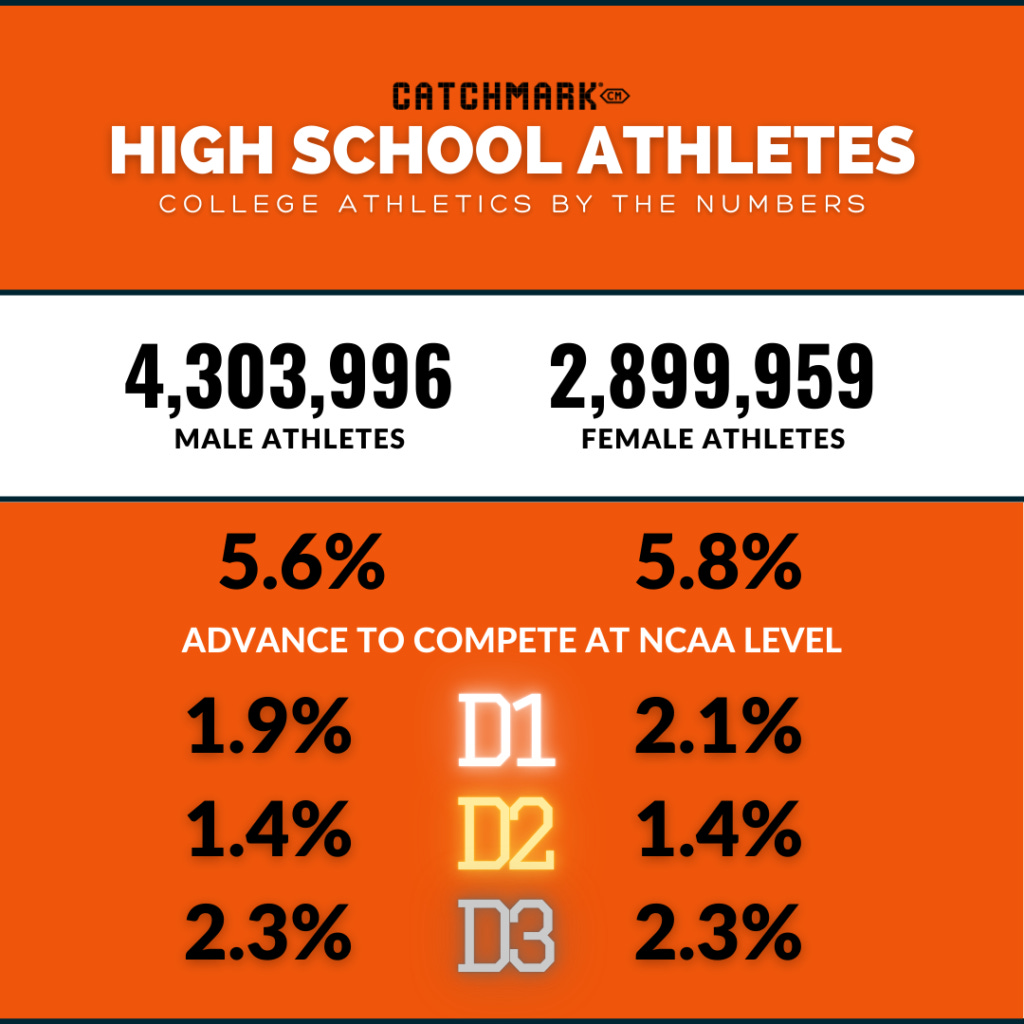
Sports franchises convince us to invest our hearts and wallets every season despite the tiny probability of winning a championship. (As a long-suffering Washington Commanders fan, I can personally attest to this.)
Investment managers pitch market-beating strategies despite the fact that most fail to outperform the S&P 500 over time.
Which reminds me of a story involving Charlie Munger.
Munger once asked an investment manager what annual returns he promised clients.
“Twenty percent,” the manager replied.
“Twenty percent annually is impossible,” Munger shot back.
The manager shrugged.
“Charlie, if I told them a lower number, they wouldn’t give me any money to invest.”
So what’s the solution? Should we all have paid closer attention during the probability chapter in high school math?
When I began writing this piece, I would have answered with an unequivocal yes.
Then something occurred to me.
Ironically, our greatest weakness may also be one of our greatest strengths.
After all, how else do you explain entrepreneurs starting companies in garages, explorers venturing into the unknown, or America’s Founding Fathers risking everything to declare independence from Great Britain?

Viewed purely through the lens of probability, many of humanity’s greatest achievements look irrational.
No rational calculation alone would have inspired those leaps.
Something else was required.
But what?
Passion.
And that leaves us with an interesting tension.
When should we trust the odds, and when should we challenge them?
When the pursuit matters as much as the outcome.
If you love learning, study hard. Chase your dream school. Take the APs and advanced classes. But if the acceptance letter never comes, your efforts will not have been in vain. The education you gain and continue building throughout your life will matter far more than the name at the top of your diploma.
If you pour countless hours into a sport you love, but never earn a scholarship, it won’t have been a waste. You will have experienced victory and defeat, learned what it means to be a good teammate, and chased a dream.
Your favorite team may never win a championship, but the memories of rooting for them will last a lifetime.
And if an investment you believed in fails, you will have learned a lesson every successful investor eventually does: even the best are wrong much of the time.
The key is understanding why you’re doing something.
If you’re chasing a dream because you genuinely love the pursuit, the odds matter less.
If you’re doing it solely for status, recognition, or some promised outcome, disappointment is almost inevitable.
My takeaway?
Understanding probabilities is essential for maintaining perspective in a world filled with unrealistic expectations and carefully curated success stories.
But if you find something you truly love, don’t let the odds become your Achilles heel.
Instead, understand the probabilities, then decide whether the dream is worth pursuing anyway. And when others choose to chase theirs, root for them too.
After all, many of humanity’s greatest achievements began with someone willing to pursue a dream despite the odds.