Significance > Success
Everyone wants to be successful. Successful in our careers, our families, and our communities. I’ve certainly felt this way, that is until this past fall after attending two events, the first being a speech from someone who is more than a decade younger than I am.
In October I attended The Mario St. George Boiardi Forum for Ethical Reflection at my high school, The Landon School in Bethesda, Maryland. The forum celebrates the values my friend George exhibited as a student-athlete at Landon and then Cornell University before passing away on this day exactly twenty-two years ago after being struck in the chest by a lacrosse ball during a game.
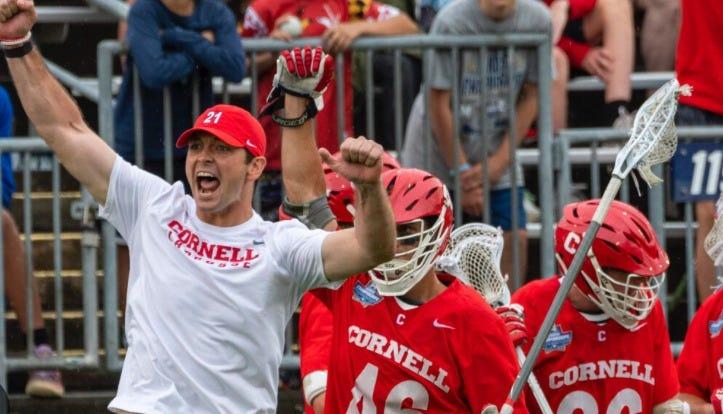
This year’s speaker was Connor Buczek, the head men’s lacrosse coach at Cornell, which had recently won the University’s first national championship in any sport in close to five decades. Of even greater significance, it happened 21 years after George passed.
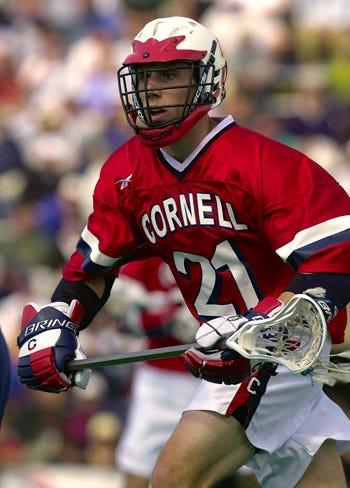
Halfway through his speech, Buczek turned to this topic of success.
Now, if I am being completely honest, I was expecting Buczek to echo the narrative you almost always hear in these scenarios — work hard, follow your passion, etc. and you will dramatically increase your odds for success. So, when he instead implored the room to chase something other than success, I perked up. After all, hadn’t he just defined success by reaching the pinnacle of his profession at the ripe old age of 32?
In his words,
“We are all chasing success at some level. We all want to be good at what we do. We want to be well regarded by our peers. However, how you do this is really important. Success often happens in a vacuum. We are so dead set on the outcome — Am I going to get into this college? Play this sport? Have this leadership role or win this accolade? Yet, being successful in this world isn’t all it’s cracked up to be. Rather we should aim to be significant, which means accomplishing things together. We want to make an impact on the people around us and bring people along with us. Success is meaningless unless we are being significant.”
This was particularly relevant because George’s life embodied significance, as evidenced by the fact that by my count, more than seventeen of his friends and teammates from high school and college have named their sons “George”.
Which brings me to the second event I attended.
A couple months after the Ethics Forum, Landon hosted an annual event that honors two graduates – one for having a distinguished career (either through service to his profession, community, or country) and another for outstanding service to the school.
While the criteria for each award are uniquely different, each year it is often difficult to distinguish which alum is winning which award based on their resumes alone. This year, though, the award winners seemed more obvious… at least on paper.
The alum who won the award for a distinguished career served in the U.S. Navy after attending Stanford in the late 1960s, has been a successful venture capitalist for more than two decades, has been a NVIDIA board member for even longer, took three companies public, and sold a fourth to Sun Microsystems.
Meanwhile, the winner of the award for outstanding service to the school has been a physical education teacher at the school for more than four decades, while also leading the weightlifting program and serving as the offensive line coach for the football team.
Yet, for as different as these two alums’ careers seemed on paper, my new appreciation for this issue of “success versus significance” made me realize that their impact on people is more similar than I may have thought in previous years.
The first served his country, created many jobs as a founder, generated meaningful investment returns for countless investors as a venture capitalist, and has helped change the world as we know it during his time at NVIDIA.
Meanwhile, the second alum also touched a lot of lives, albeit in a very different way. A way that I hadn’t fully appreciated until he explained why he chose to pursue the career he did.
He explained by saying,
“The reason I chose this career is because after graduating from college, I came to the conclusion that I could have a bigger and more long-lasting impact on students through teaching physical education, coaching sports, and working with them as a strength coach than I could as a classroom teacher.”
I loved his rationale,
“See, helping a young boy avoid always being the last one picked in a game or helping an unathletic or small boy gain coordination, speed, strength, and most importantly confidence, brings long-lasting effects. As a mediocre athlete myself, I knew I had to work hard to improve physically in order to play. In doing so, I learned that self-efficacy is the most valuable lesson that I can teach because it helps kids develop work ethic, character, and the ability to handle challenges long after they leave the playing field.”
In essence, this alum’s goal was to help young men who weren’t as strong or talented as people like George have the opportunity to share the same field with them. To be their teammates. To be their friends.
Considering how many young men had passed through that weight room over the years, I knew he had helped hundreds, if not thousands, of young men over the years. What I didn’t fully appreciate was how. That is until I had lunch with another alum a few weeks later.
This alum graduated a few years after I did, spent more than fifteen years in the Marine Corps, and looks every bit the part, standing 6’2 and 190 pounds with a short and tapered haircut.
During our conversation I told this Marine the story about these two award winners and, as I did, I witnessed a huge smile emerge across his face. Naturally, I asked him why?
His response?
“Because when I was in high school, I was the smallest kid in my class at 5’ 6” and 125 pounds, and didn’t hit my growth spurt until I got to college. As a result, it was difficult for me to make varsity sports, but Marty saw something in me. So, with his help in the weight room, I ended up occupying the 126-pound weight class for the wrestling team. Later, after being cut from the varsity lacrosse team in high school, I went on to not only make my college lacrosse team as a walk-on, I eventually was elected a captain as a senior. Then, with more to prove after college, I joined the Marines. Marty’s confidence in me was a big part of the reason why. When I was the smallest kid in my class, he was the one who instilled in me the confidence to know I could do anything. I owe him a lot. It’s the reason he and his wife were at my wedding a few years ago.”
Impacting lives quietly along the way. George did it in his own unique way, as did the two other alums.
Now that’s significance.